
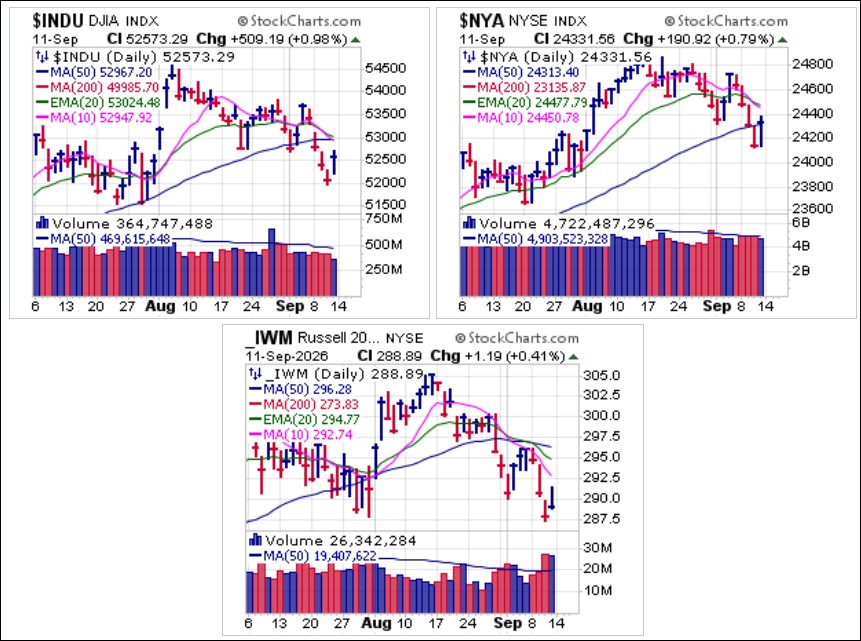
 Among the less tech-centric indexes, the Dow and NYSE Composite rallied Friday after dropping for four straight days in a row in cascading declines. The small-cap Russell 2000 via the iShares Russell 2000 (IWM) ETF rallied sharply early in the day on Friday but eventually reversed to close near its intraday lows in a tail-up finish.
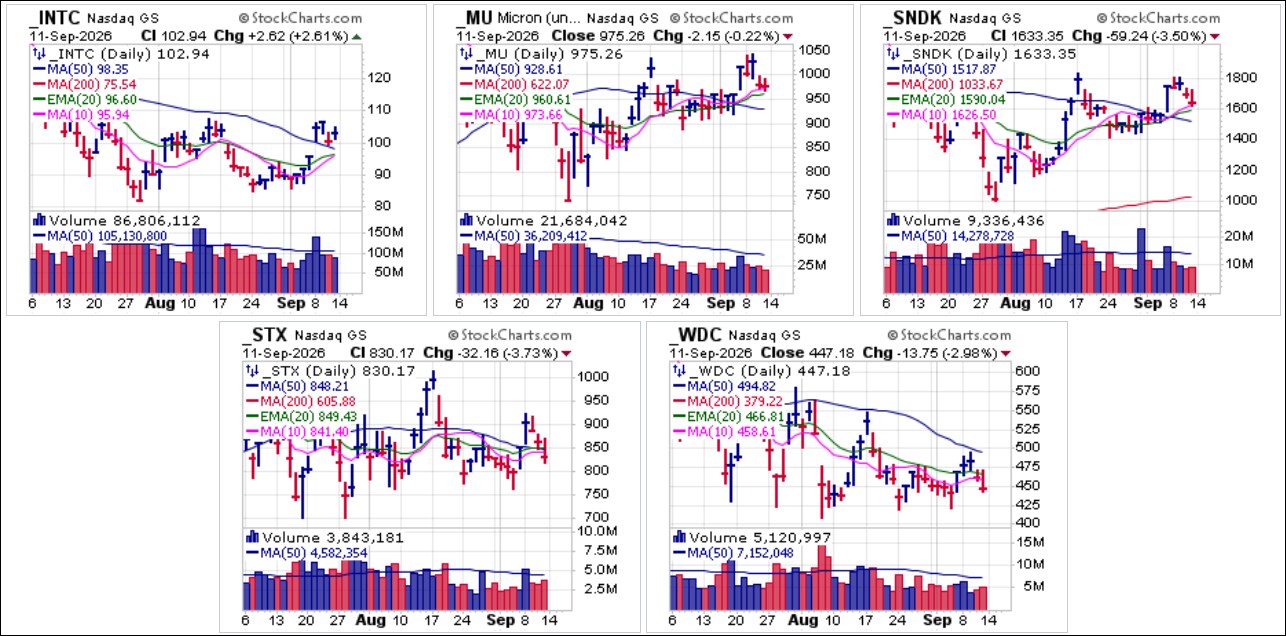
 The Goldmans Sachs tech conference may have been behind some of the moves we saw two Fridays ago. Among names we reported on at that time, Intel (INTC) gapped through its 50-dma on Tuesday but backed into 50-dma support where it more or less finished the week. Micron Technology (MU) and SanDisk (SNDK) both posted strong pocket pivot moves two Fridays ago but those ended the week back at the 10-dma/20-dema and have mostly retraced the strong moves seen two Fridays ago. Whether any of these pullbacks in INTC, MU or SNDK become buyable at moving average support may depend on Wednesday's Fed policy announcement.
Elsewhere, semiconductor memory leader Seagate Technology (STX) posted a very strong pocket pivot through the 50-dma on Tuesday, but that quickly failed over the remained of the week as it then triggered a short-sale entry at the 10-dma, 20-dema and 50-dma on Friday. Western Digital Corp. (WDC), another memory leader, also triggered a short entry at the 10-dma and 20-dema on Friday after a rally into 50-dma resistance stalled on Wednesday.
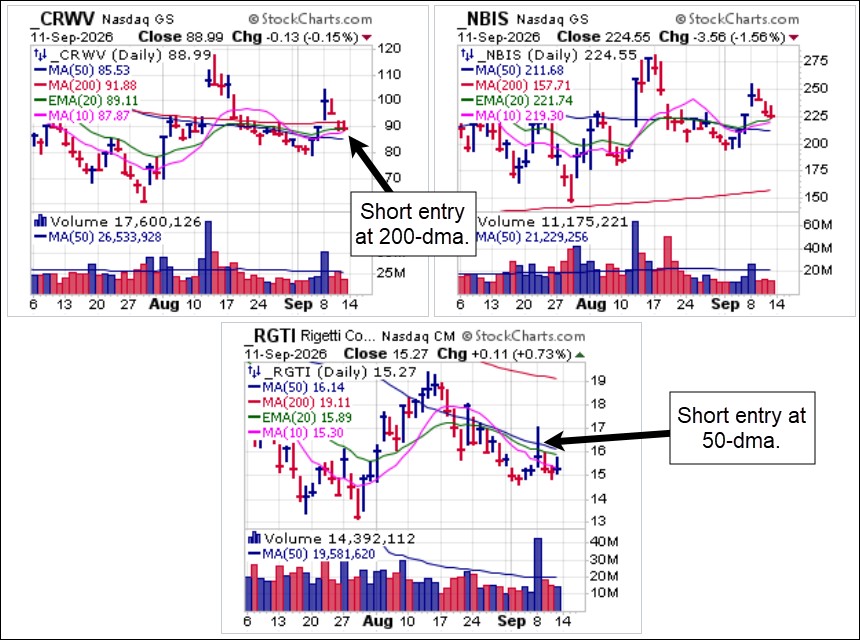
 AI infrastructure names CoreWeave (CRWV) and Nebius Group (NBIS), along with quantum computer Rigetti Computing (RGTI) all gapped higher on Tuesday, but the moves lacked any follow-through whatsoever as they eventually failed by week's end. The Tuesday moves might have also been influenced by the Goldman Sachs tech conference and were more examples of initial strength that goes nowhere in this market, what I refer to as the one-day wonder trade phenomenon. CRWV ended the week by triggering a short entry at the 200-dma while RGTI had already played out as a shortable gap-up (SGU) on Tuesday as it reversed badly at the 50-dma.
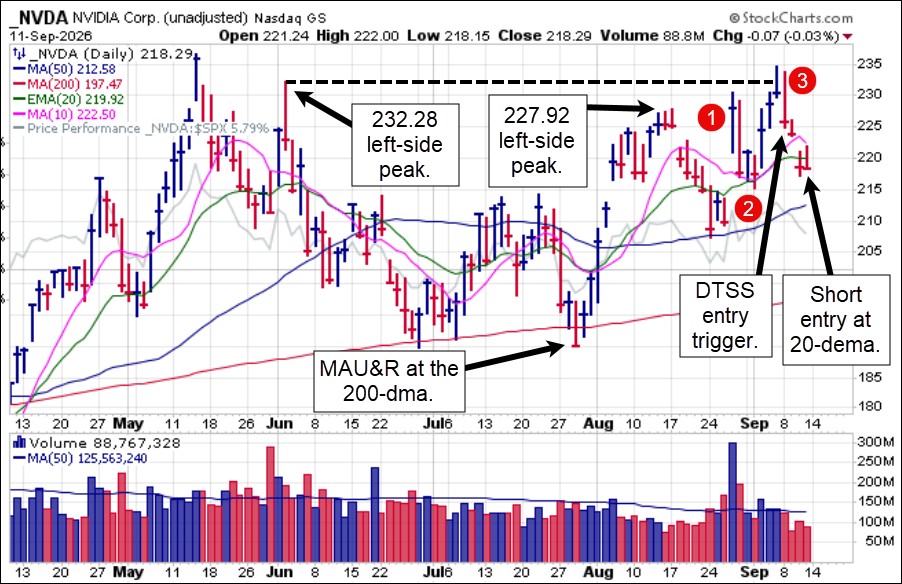
 The action in Nvidia (NVDA) over the past two weeks has also been representative of this one-day wonder phenomenon. Two weeks ago the stock posted a strong BGU at #1 which immediately failed as it triggered a double-top short-sale (DTSS) entry the very next day. It then broke down to the 20-dema at #2 where it posted a moving average undercut & rally (MAU&R) long entry at the line. That was good for a three-day move to higher highs before NVDA failed at the 232.28 left-side peak to trigger another DTSS at #3. Despite CEO Jensen Huang boasting at the Goldman tech conference on Thursday that NVDA is “the world’s first and only growth value stock,” the stock gapped below 20-dema support where it was a short-sale entry that day and again on Friday.
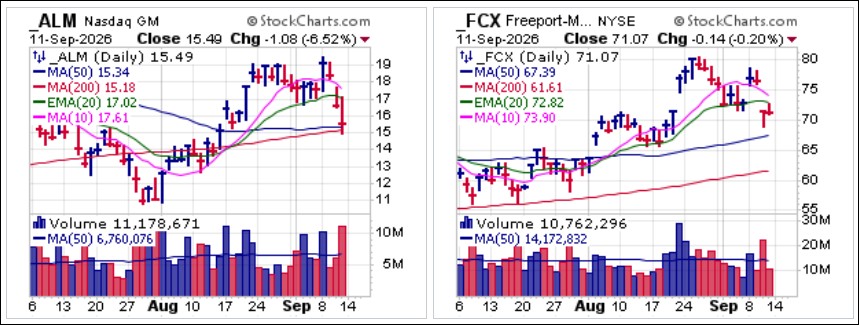
 Strength in tungsten miner Almonty Industries (ALM) and Freeport-McMoRan (FCX) on Tuesday, which looked impressive at the time, faded badly by the end of the week. ALM failed on its breakout attempt and triggered a short-sale entry as it broke 10-dma and then 20-dema support on the way down Thursday and Friday. FCX gapped through the 10-dma on Tuesday but volume volume was not sufficient for a BGU or a pocket pivot but it held support at the 10-day on Wednesday. It then gapped down on Thursday after the Trump Administration expressed doubts about following through on copper tariffs.\\
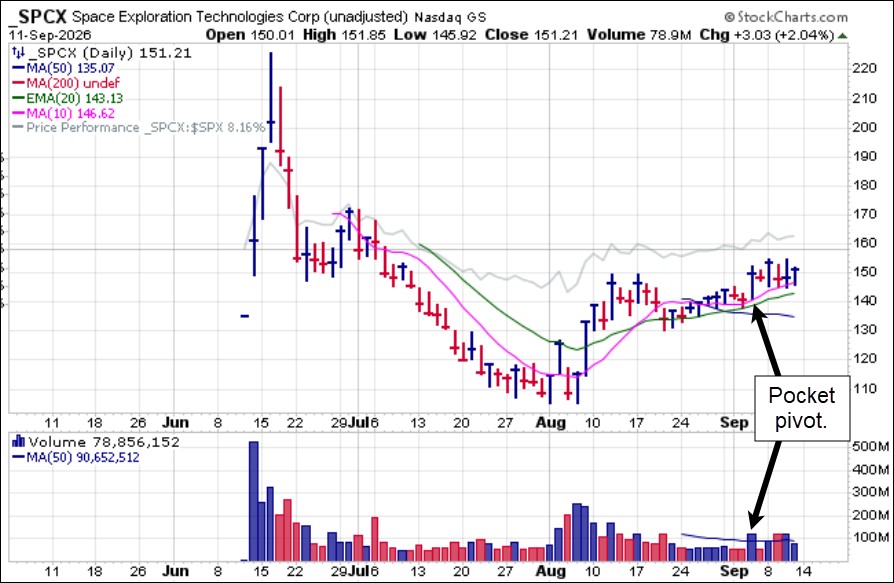
 One of the few stocks to hold up after we issued a long-side report has been SpaceX (SPCX). The stock posted a pocket pivot at the 10-dma two Thursdays ago and has held 10-dma support since then. That said, it has also not shown any substantial follow-through. However, as long as it holds 10-dma support it remains in play as a pocket pivot long entry on any constructive pullbacks to the 10-dma from here.
 This remains a difficult market given the short duration of any strength. We now await the Fed policy announcement on Wednesday where CME FedWatch currently assigns an 85.6% probability of a 1/4-point rate hike. How that will move the market remains unclear in a market with an elevated difficulty factor, so conduct your operations accordingly.
The Market Direction Model (MDM) remains on a BUY signal.