
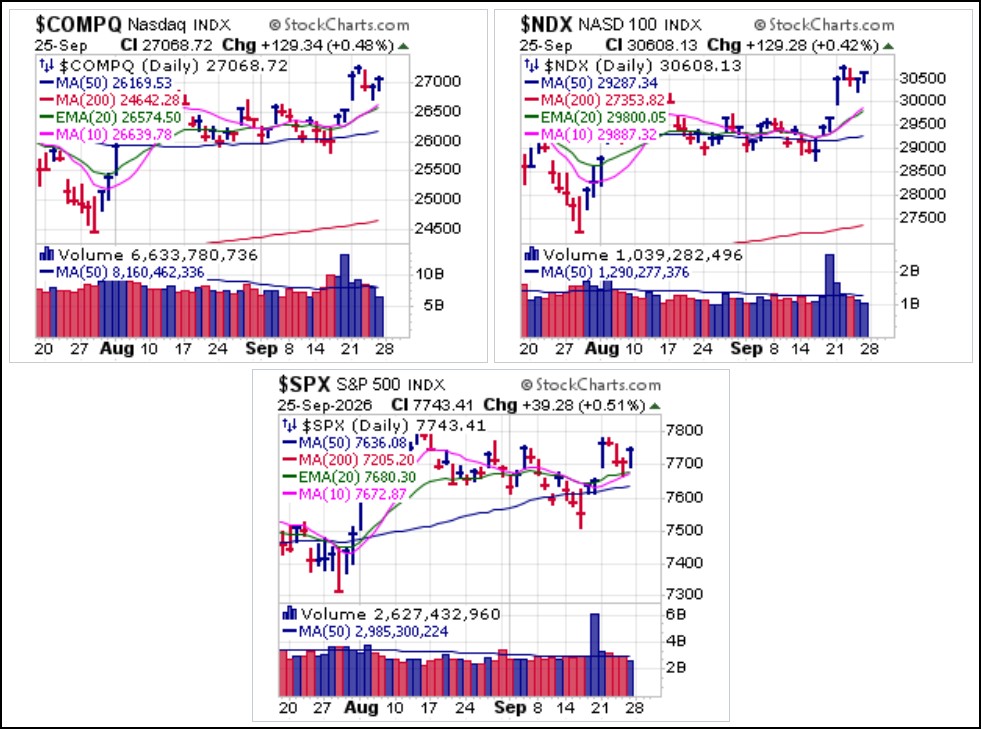
What is clear is that despite the fretting of market pundits and cable TV talking heads, there has not been a general tipping point for stocks. Nothing in the stock market, at least as of yet, snapped, heading into the end of the week as Treasury Yields spiked as many feared. And so, in sheer defiance, the NASDAQ Composite and NASDAQ 100 Indexes both logged all-time highs on Tuesday before backing off and consolidating for the rest of the week as they remain well above 10-dma and 20-dema support.
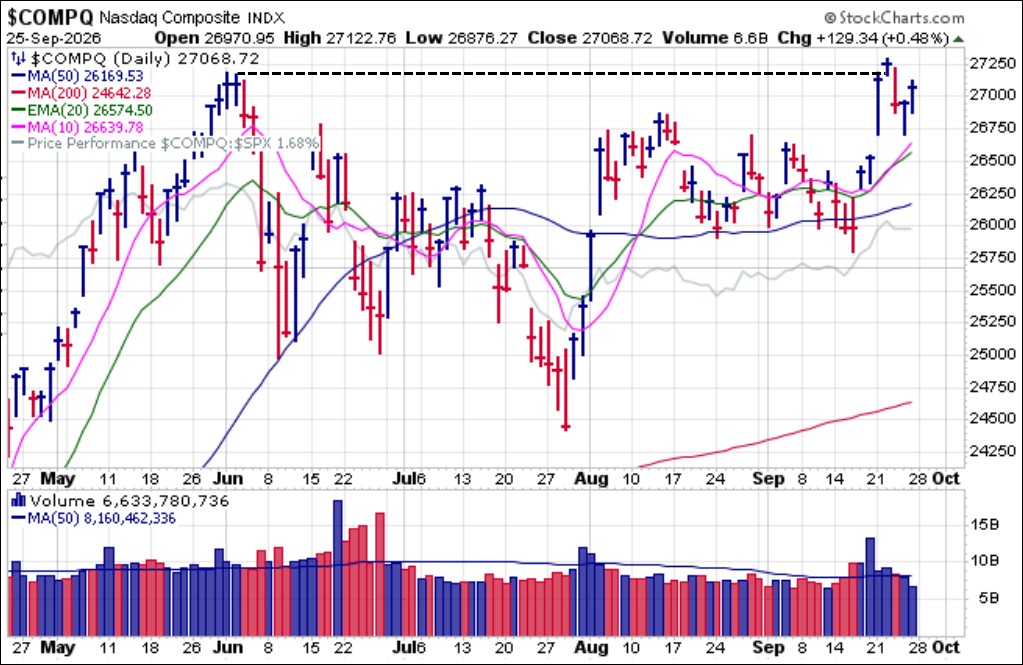
Both NASDAQ Indexes then reversed to close back below the early June prior highs, as the daily chart of the NASDAQ Composite shows below. It ended Friday back up near those highs as it closed up for the week. At least from an index point-of-view, the action in the NASDAQ and S&P 500 Indexes is not bearish.
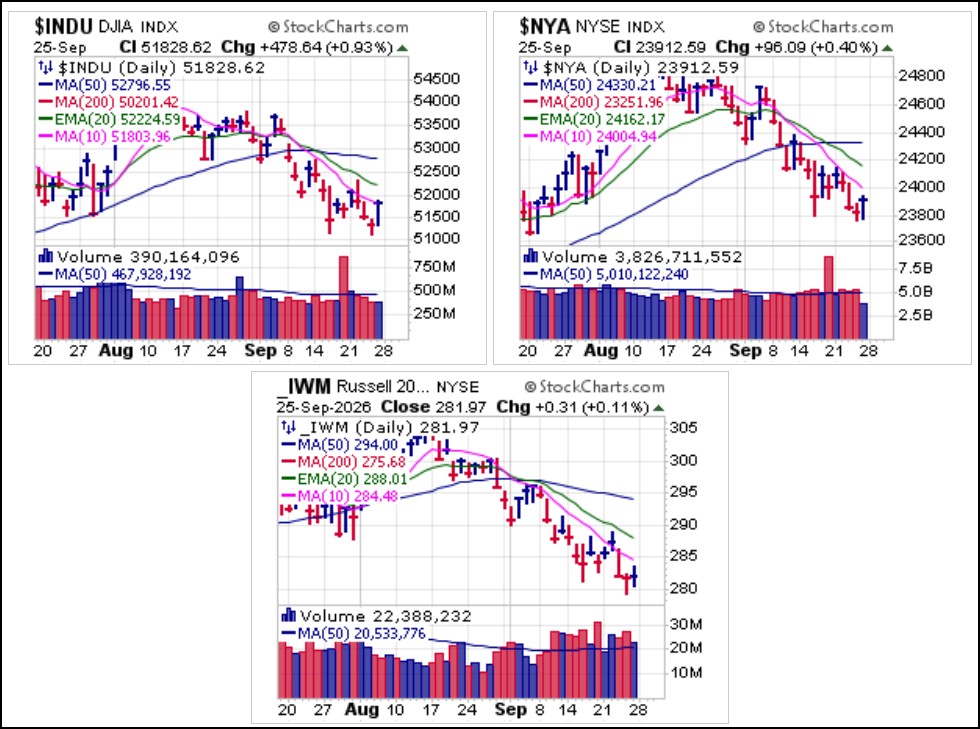
 That, at least, has been the story for the tech-centric indexes. The rest of the market, including the Dow, the NYSE Composite and small-cap Russell 2000 via the iShares Russell 2000 (IWM) ETF have all rallied over the past two days but remain in steady overall downtrends. Thus, we see that in fact rising market interest rates, particularly the $TNX which serves as an index for mortgage and credit debt, has taken its toll on the economically-sensitive and consumer-oriented areas of the market, as we discussed in last week's Weekend Review Report.
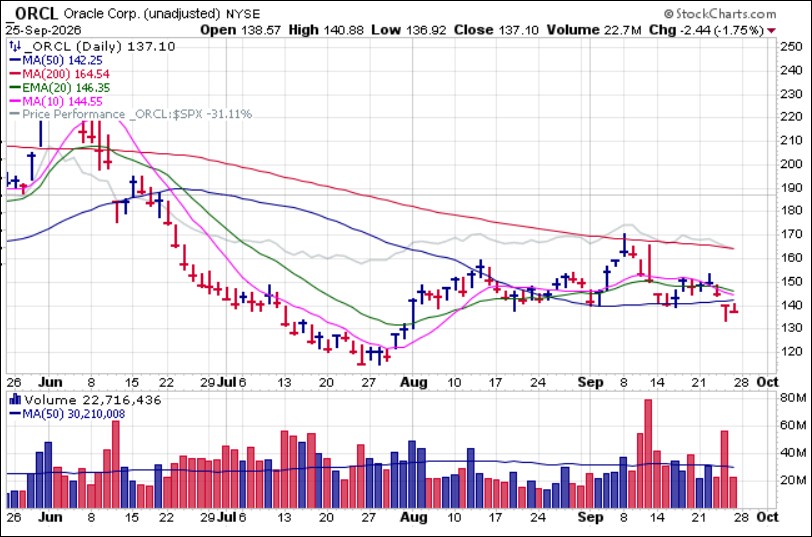
 Another surprise with respect to the tech space is that the house did not come tumbling down on Thursday's news that Oracle (ORCL) had sent Private Credit Blue OWL Capital (OWL), the developer of Project Jupiter, a massive data center campus ORCL is building in New Mexico, a force majeure notice could kill the market on Thursday. The company is trying to delay or protect itself from certain payments if the site misses its 2028 target rather than walking away as the main tenant.
The project has already faced permit denials, local opposition, environmental challenges, a delayed gas pipeline, and stressed project debt. ORCL publicly says the project remains on schedule and it is still committed, as if it would say anything else. But as Bill O’Neil used to say, don’t listen to what they say, watch what they do.
For now, what ORCL is doing on the chart is posting a shortable gap-down (SGD) using the 50-dma as a covering guide. The stock attempted to rally towards the line Friday morning before turning tail and posting a lower closing low. For now it remains a short as close to the 50-day as possible.
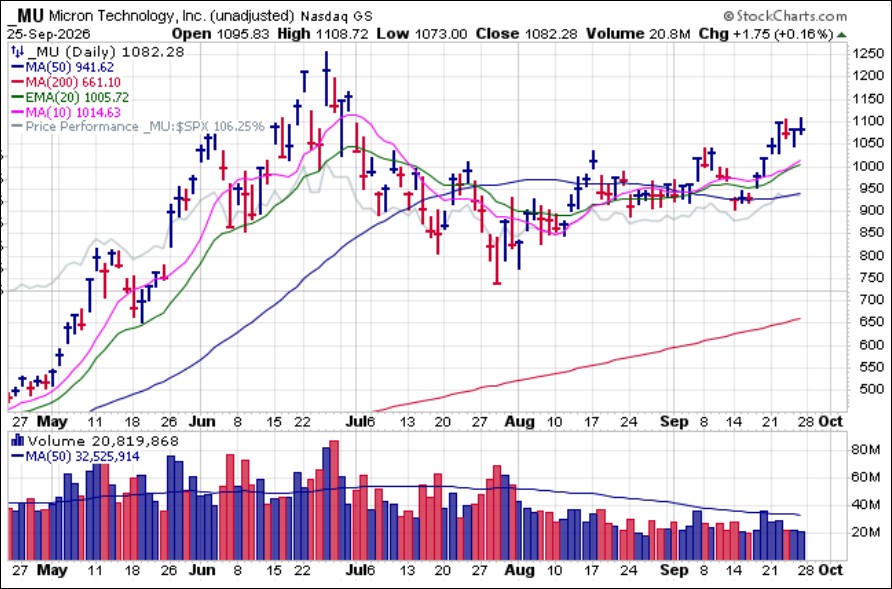
 Micron Technology (MU) may play the role of catalyst for the semiconductor space this week when it reports earnings on Wednesday after the close. The stock is currently trying to work it was up the right side of a potential new base, although the road off the late July lows has been a choppy one. We would expect that earnings on Wednesday will catalyze the trend for MU, one way or the other, while keeping in mind that the stock is not necessarily an overvalue AI name since it only sells at 7x forward earnings.
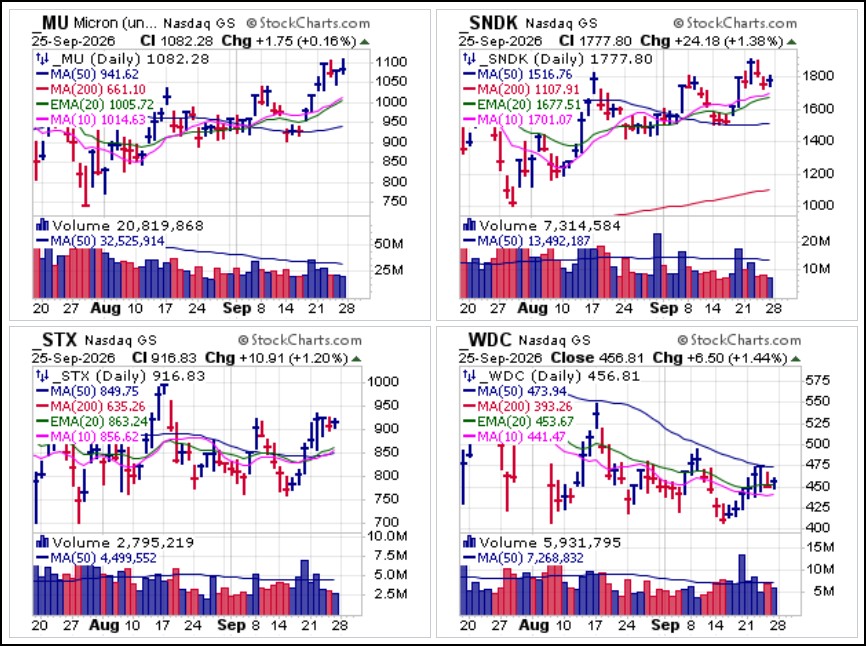
 Also watch for sympathy moves in MU's memory chip cousins, SanDisk (SNDK), Seagate Technology (STX) and Western Digital (WDC). High-velocity, high time-value long or short set-ups can often appear after a company reports earnings not only in its own stock but also in its close peers as they engage in sympathy moves. These will certainly be names to watch in the after-hours on Wednesday once MU releases its latest earnings report. Stay tuned.
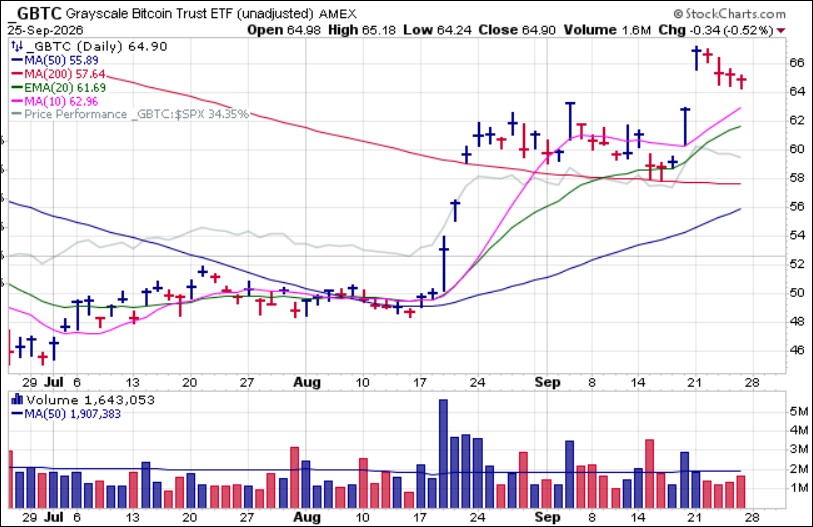
 Bitcoin ($BTCUSD) via the Grayscale Bitcoin Trust (GBTC) is consolidating normally after gapping higher on Monday. The 10-dma is steadily catching up to price and this is where we would look for a buyable pullback on any constructive test of the line. Note that Monday's move did not constitute a buyable gap-up (BGU) since volume was insufficient.
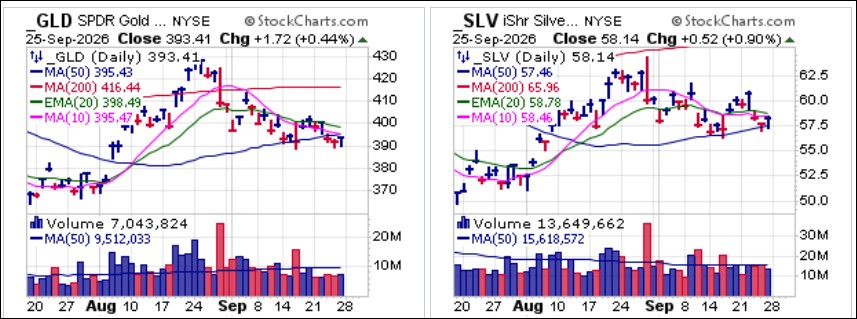
 Gold and silver via the SPDR Gold Trust (GLD) and the iShares Silver Trust (SLV) remain near recent lows. The SLV is currently at a potential long entry position at 50-dma support where it posted an MAU&R on Friday. The GLD sits just below 50-dma resistance such that any move through the line would trigger a potential MAU&R long entry using the line as as selling guide, so can be watched for.
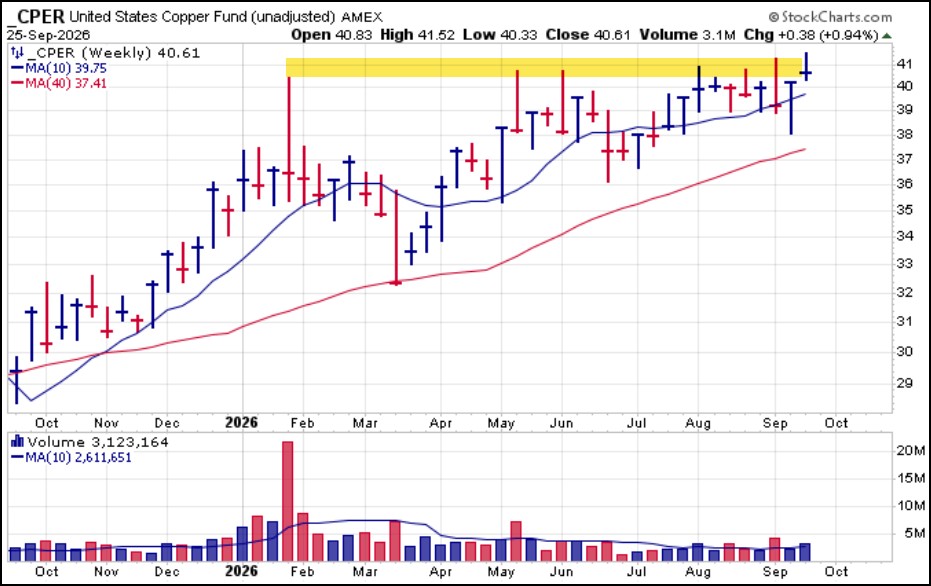
 Copper via the United States Copper Fund (CPER) remains ended the week not too far off its all-time high set on Tuesday. Spot Copper hit $6.83 a pound that day before backing down to close at $6.70, still good enough for an all-time weekly closing high. Note taht copper has run into selling every time it has tried to make a run for the $7.00 level in 2026. Any pullback to the 20-dema in CPER would bring it into optimal buying range along the 20-dema on the daily chart so can be watched for.
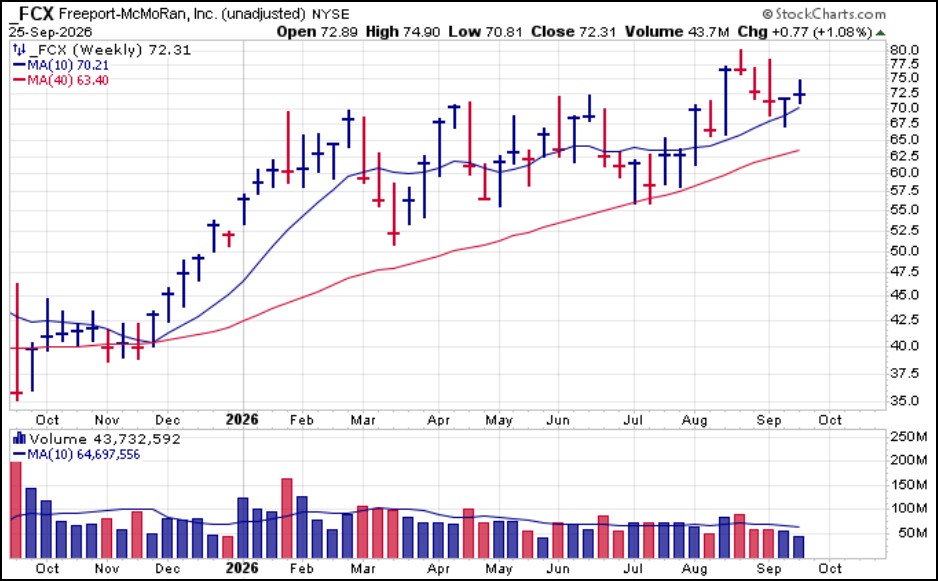
 Freeport-McMoRan (FCX) has been the only copper miner to break out recently as most names in the group remain trapped within bases. FCX broke out on the weekly chart below six weeks ago and has had one test of and MAU&R at the 10-week moving average last week. It remains in buying range here using the 10-week line as a tight selling guide.
 This has been a bifurcated market for some time, with most of the economically-sensitive and consumer-oriented sectors under selling pressure for weeks now as they feel the effects of higher yields. Tech, on the other hand, has been in recovery mode as many names, particularly in the semiconductor space, attempt to move up the right side of potential new bases. This creates a very fluid situation since if beaten-down non-tech areas of the market stage more substantial oversold rallies after weeks of selling and techs continue to build the right sides of potential new bases, the market could as a whole act better than many think.
The Market Direction Model (MDM) switched to a BUY signal on Monday, September 21, 2026.