
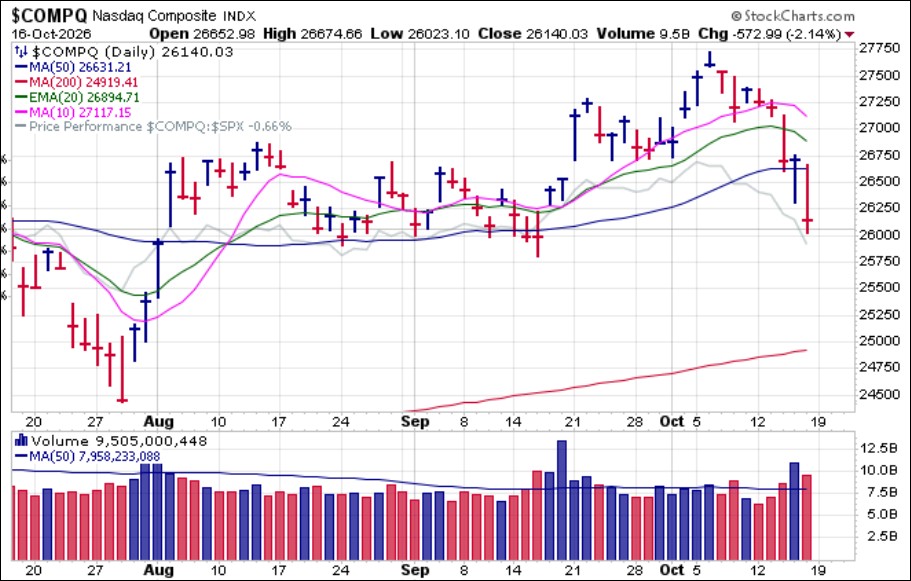
 One major catalyst for the continuation of the sell-off came when Anthropic, the creator of Claude, a family of large language models (LLMs) and AI assistants, reported Q3 revenue of about $16.8 billion (roughly +45–50% sequentially from the prior quarter, with adjusted profitability). That is still very strong absolute growth, but it decelerated sharply from earlier quarters (prior sequential growth was much higher, around 140%+ in some reports) and fell short of some investor expectations ahead of a potential large IPO. Similar concerns exist more broadly: whether application-layer and enterprise AI revenues will scale fast enough to justify the infrastructure spend. Some analyses point to large gaps between projected spending and the revenues needed for solid returns.
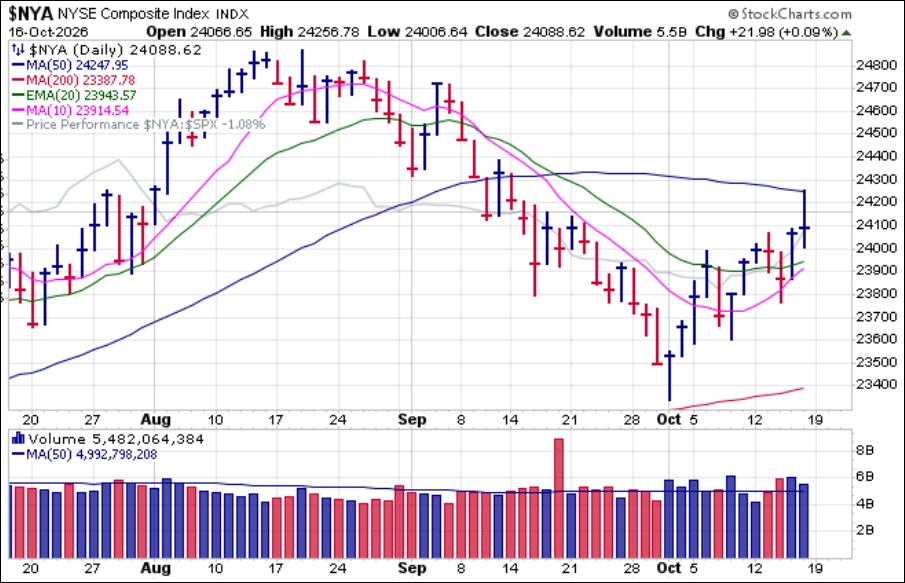
As AI-related techs were slammed, previously beaten-down areas of the market, primarily consumer- and economically-related, including retail, restaurants, travel, homebuilding, financials, consumer discretionary, etc. staged oversold reaction rallies over the past two weeks. That may have ended on Friday as the NYSE Composite Index, standing in for everything that is not tech, reversed hard at 50-dma resistance.
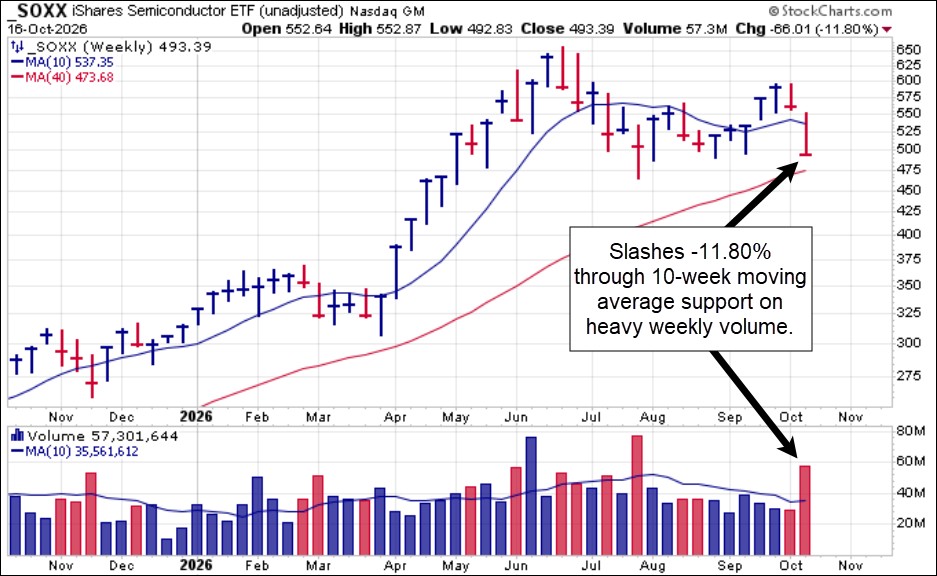
 Some of the most brutal declines occurred in the semiconductor and telecom sectors where the AI trade has been centered. We were very much on top of this in last weekend's Weekend Review report as we discussed nascent short-sale set-ups in several semiconductor names a week ago. It is instructive for members to first review our Weekend Review of last week here: https://www.virtueofselfishinvesting.com/reports/view/vosi-weekend-review-for-the-week-ended-october-9-2026
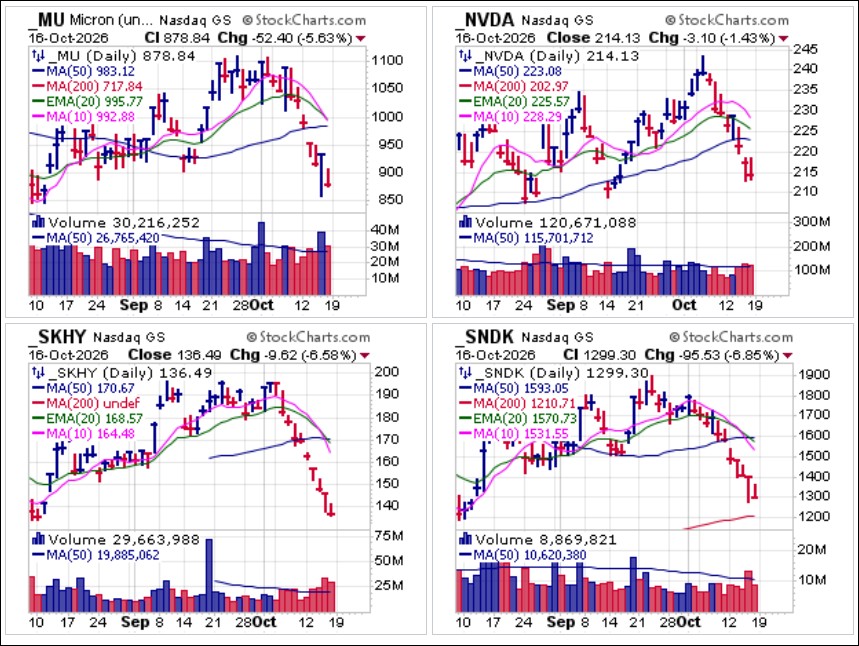
 Last week we noted that Micron Technology (MU) had closed below 20-dema support two Fridays ago, a clear short-sale entry point. We also pointed out that Nvidia (NVDA) had posted a double-top short-sale (DTSS) entry at the 236.54 left-side peak of its current base and that if it busted 20-dema support a new short-sale entry trigger would be established. It did that on Monday of this past week and then broke sharply lower as it slashed through 50-dma support by the end of this past week. Finally, we also noted that SK hynix (SKHY) and SanDisk (SNDK) had closed below 50-dma support two Fridays ago and that these new breaks below the line "could be treated as secondary short entries using the 50-day lines as covering guide. Overall, however, the action speaks to weakness in semiconductors despite the up day in the NASDAQ Indexes..." That weakness certainly came to full bearish fruition this past week.
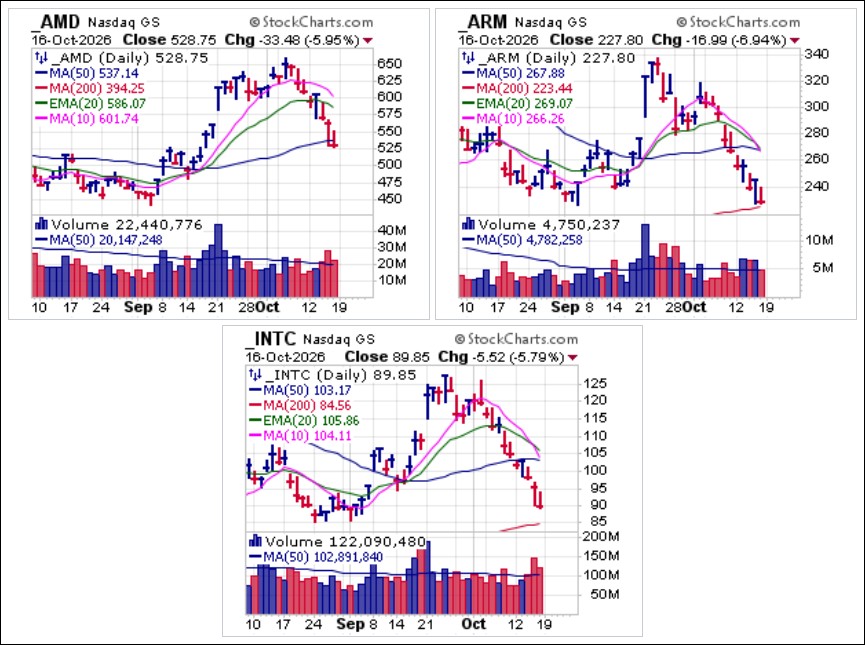
 Last weekend we also discussed short-sale entries last weekend in semiconductor CPU makers as, as we noted at that time, had all started to come unraveled. Two Fridays ago Advanced Micro Devices (AMD) busted 10-dma support on Thursday to trigger an aggressive short-sale entry at that point, as we noted, and at that time appeared poised to test 20-dema support. It did that early this past week before busting 20-day support to trigger another short-sale entry on Wednesday. Both Arm Holdings (ARM) and Intel (INTC) broke 10-dma and 20-dema support the prior week, as we noted last week, triggering short-sale entries at the 20-day two Thursdays ago. Both stocks then went on to become short-sale entries along their 50-dmas early this past week before blowing to the downside and lower lows this week. Only AMD now remains in a short-sale position just below its 50-dma while ARM and INTC descend lower to test 200-dma support.
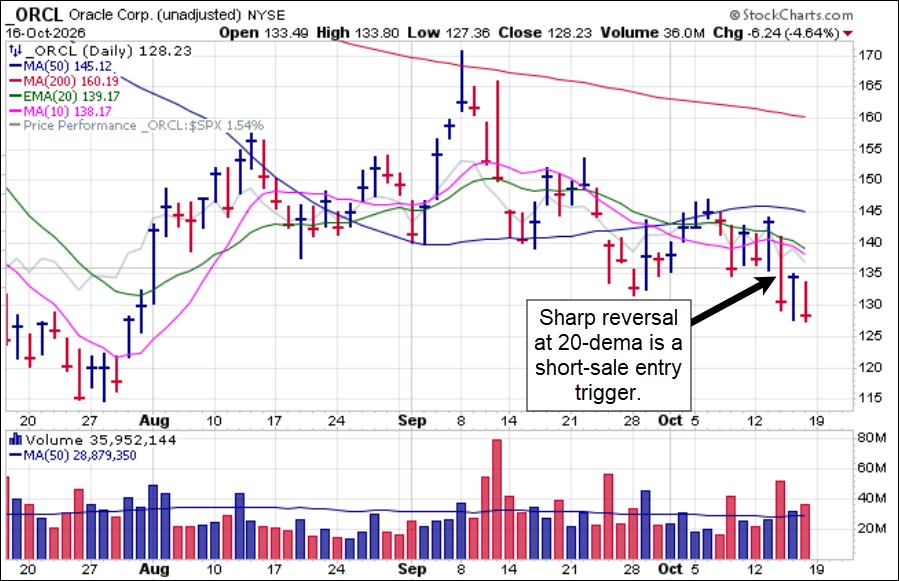
 Last weekend we also discussed Oracle Corp. (ORCL), as a potential short entry as it rallied up towards the 50-dma two Fridays ago. Eventually the stock never quite made it to the 50-day line before reversing badly at the 20-dema on Wednesday and breaking to lower lows. It is quite fascinating to see just how badly all these short-sale set-ups in AI-related techs that we discussed last weekend finished up a week later.
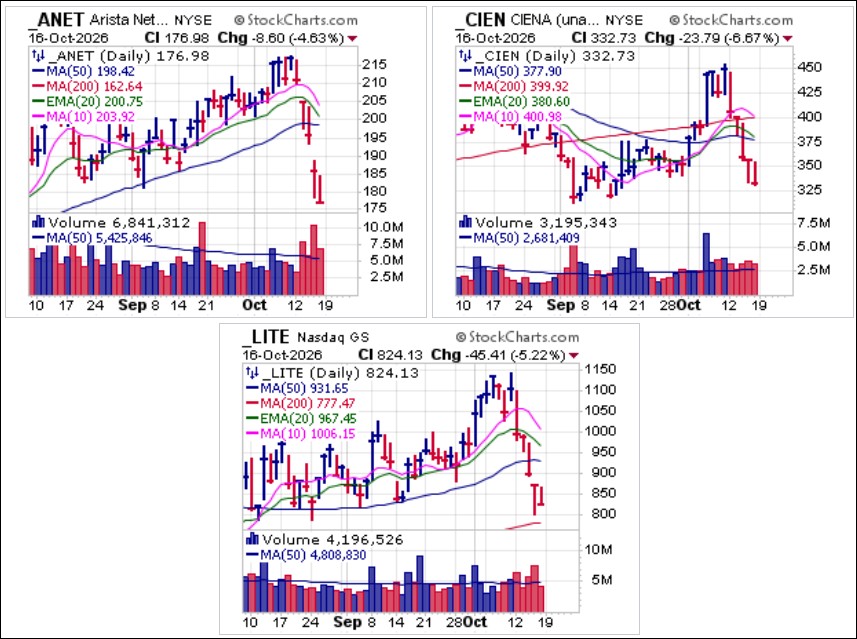
 Telecom leaders Arista Networks (ANET), Ciena (CIEN) and Lumentum (LITE) saw sharp drops this past week. ANET gapped lower on Tuesday to bust 20-dema support and then rallied back into the line before reversing to trigger short-sale entries at the 20-dema and the 50-dma on Wednesday. This all hit suddenly after the stock posted new all-time highs last week. LITE was also posting new highs last week before busting 10-dma and then 20-dema support on Monday where short-sale entries were triggered at each moving average on the same day. Both CIEN and LITE then went on to trigger short-sale entries as they slashed through 50-dma support on Wednesday.
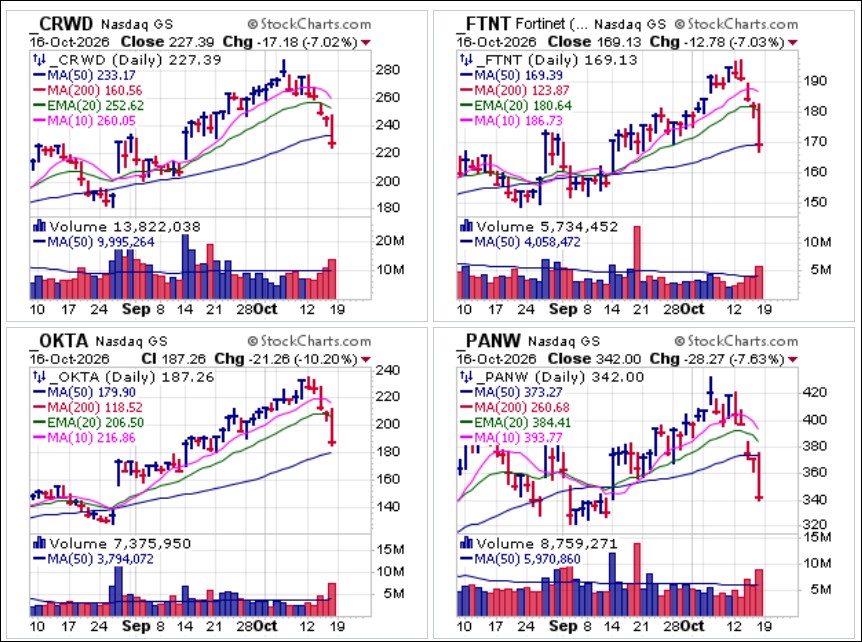
 Cybersecurity names, which had been posting new highs as recently as last week, blew apart on Friday. CrowdStrike (CRWD), Fortinet (FTNT) and Palo Alto Networks (PANW) busted 10-dma and 20-dema support earlier in the week before ending the week under 50-dma support. PANW, most notably, slashed through its 50-dma on Friday after gapping below the 20-dema on Wednesday. Okta (OKTA) was a short at the 20-dema on Friday and is now set to test 50-dma support. As leading stocks the week before, these quickly morphed into the proverbial next shoes to drop, and that was certainly the case this week as the AI trade came unglued across the board.
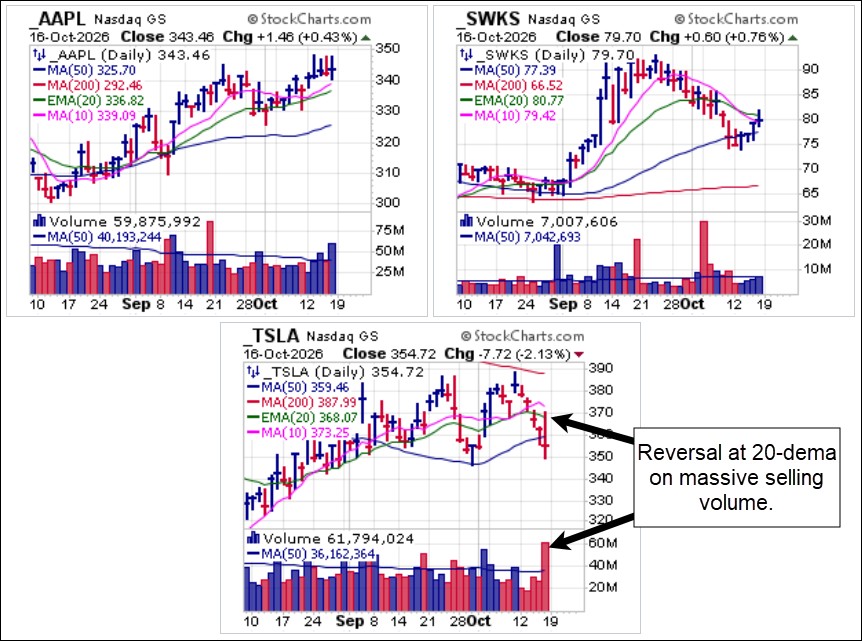
 On Wednesday of this week we reported on Apple (AAPL), Skyworks Solutions (SWKS) and Tesla (TSLA) as short entries. APPL held tight, however, but over the past four days has reversed each time along the July 29th 344.57 left-side peak in its current cup formation. Technically, those all trigger double-top short-sale (DTSS) entries using the 344.57 left-side peak (out of view to the left of the chart) as a tight covering guide. From here, we would look for any break below the 10-dma and then the 20-dema as secondary short-sale entries. SWKS was hanging along 50-dma resistance on Wednesday when we reported on the stock as a short-sale entry, but it defied the end-of-week semiconductor sell-off to rally into 20-dema resistance where it stalled and triggered an opportunistic short entry using the 20-day as a covering guide. TSLA had triggered a short this past Wednesday as it busted 20-dema support. A rally on Friday morning back into the 20-dema that came on an impressive demonstration of its next generation Tesla Roadster that showed off its fan-based suction system to cling to an inverted curved ramp and then descend back to the ground using rocket thrusters. However, the news-induced rally merely set up another short entry at the 20-dema as it reversed hard and then slashed through 50-dma support to trigger a second short entry on very heavy selling volume. Technically, Friday's close below the 50-dma sets up another short entry using the 50-day as a covering guide.
 Overall, a brutal week for big-stock AI techs, but we were on top of it as it began to unfold a week ago per last week's Weekend Review. When stocks break as badly as they did this past week, that report turned out to be quite prescient and profitable for anyone paying attention. With the indexes and AI techs mostly streaking to lower lows on Friday, the stage is set for more downside this coming week.
The Market Direction Model (MDM) remains on a BUY signal.